Ranthambore National Park
Witness the Majesty of the Wild in Rajasthan
Explore one of India’s most iconic wildlife destinations — Ranthambore National Park. Nestled in the heart of Rajasthan, this former royal hunting ground is now a thriving tiger reserve, known for its dramatic landscapes, ancient ruins, and rich biodiversity. Book your safari in advance and step into the wild!
| Core Zone (Safari Zones) | Buffer Zone (Safari Zones) |
|---|---|
| Zone 1 – Singh Dwar | Zone 7 – Chidikho |
| Zone 2 – Amrahi | Zone 8 – Balas |
| Zone 3 – Kachida | Zone 9 – Kuwalji |
| Zone 4 – Malik Talao | Zone 10 – Aantri |
| Zone 5 – Rajbagh | |
| Zone 6 – Kundal (core but near buffer) |
📍 How to Reach Ranthambore
🛫 By Air
The nearest airport is Sanganer Airport, Jaipur, located about 180 km from the park.
Regular flights operate from Delhi, Mumbai, Chennai, and Bangalore.
From Jaipur, you can hire a taxi or board a bus to reach Ranthambore in about 3 to 4 hours.
🚆 By Train
The closest railhead is Sawai Madhopur Railway Station, just 10 km from the national park.
Easily accessible via local taxis, cabs, or buses.
Distances from Major Cities
| City | Distance | Travel Time |
|---|---|---|
| Delhi | 381 km | ~6 hours (via NH8 & NH11A) |
| Jaipur | 180 km | ~3 hours (via RJ SH 24) |
| Udaipur | 388 km | ~6 hrs 10 min (via NH76 & SH29) |
| Agra | 239–250 km | ~4–5 hours (via RJ SH 1) |
| Bharatpur | 202–270 km | ~3.5–6 hours (via RJ SH 1) |
| Ahmedabad | 640 km | ~9 hrs 45 min (via NH8 & NH76) |
| Mumbai | 1031 km | ~17 hours (via NH3) |
🌿 Flora – A Dry Deciduous Haven
Ranthambore’s landscape is dominated by Dhok trees, which make up nearly 80% of the park’s green cover. The forest also features:
Medicinal trees like Banyan and Pipul
Fruiting trees like Mango, Jamun, Ber, and Indian Blackberry
Iconic blooms like Flame of the Forest (Chhila/Butea monosperma)
🐾 Fauna – The Wildlife Crown of Ranthambore
Ranthambore is a biodiversity hotspot, offering sightings of rare mammals, birds, reptiles, and more.
🐅 Big Cats:
Royal Bengal Tiger, Leopard, Caracal, Fishing Cat, Jungle Cat
🐘 Other Mammals:
Sloth Bear, Hyena, Jackal, Desert Fox, Nilgai, Sambar, Barking Deer, Wild Boar
Gaur, Chausingha, Chinkara, Asiatic Jackal, Ratel, Bengal Fox, Mongoose
🦜 Birds (Excellent for Birdwatching):
Grey Hornbill, Indian Peafowl, Red Junglefowl, Sarus Crane, Kingfisher, Parakeets
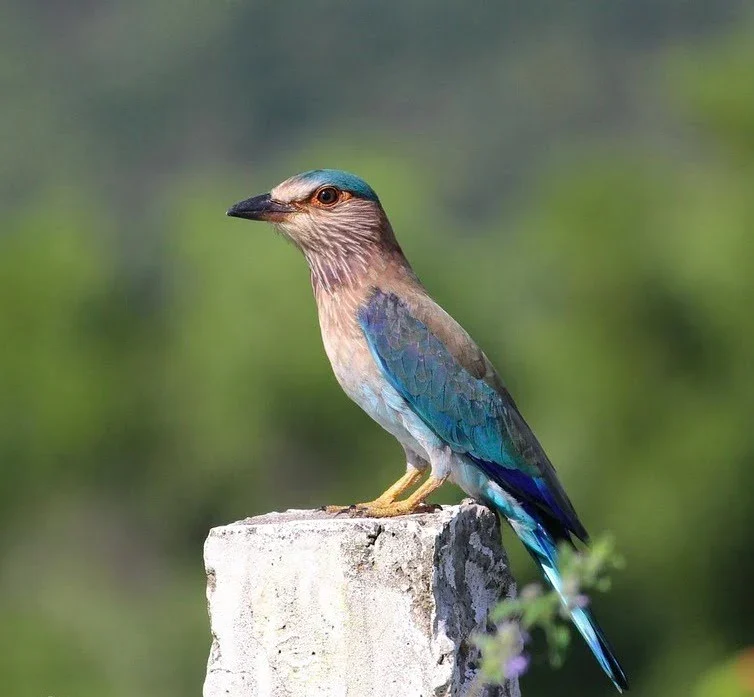
Black Kite, Vultures (Egyptian, Black), Crested Serpent Eagle, Indian Roller
🐍 Reptiles:
Cobra, Krait, Russell’s Viper, Python, Rat Snake, Lizards, Turtles, Monitor Lizard
☀️Climate & Best Time to Visit
| Season | Months | Details |
|---|---|---|
| Summer | April – June | Hot (up to 45°C), best for tiger spotting near waterholes. Light cotton wear advised. |
| Monsoon | July – October | Heavy rainfall; park partially closed. Lush greenery, but limited accessibility. |
| Winter | November – February | Pleasant days (~19°C), chilly nights. Best for safaris. Carry warm clothing. |